Party Wall Act 1996: A Complete Guide for Essex Property Owners Planning Extensions
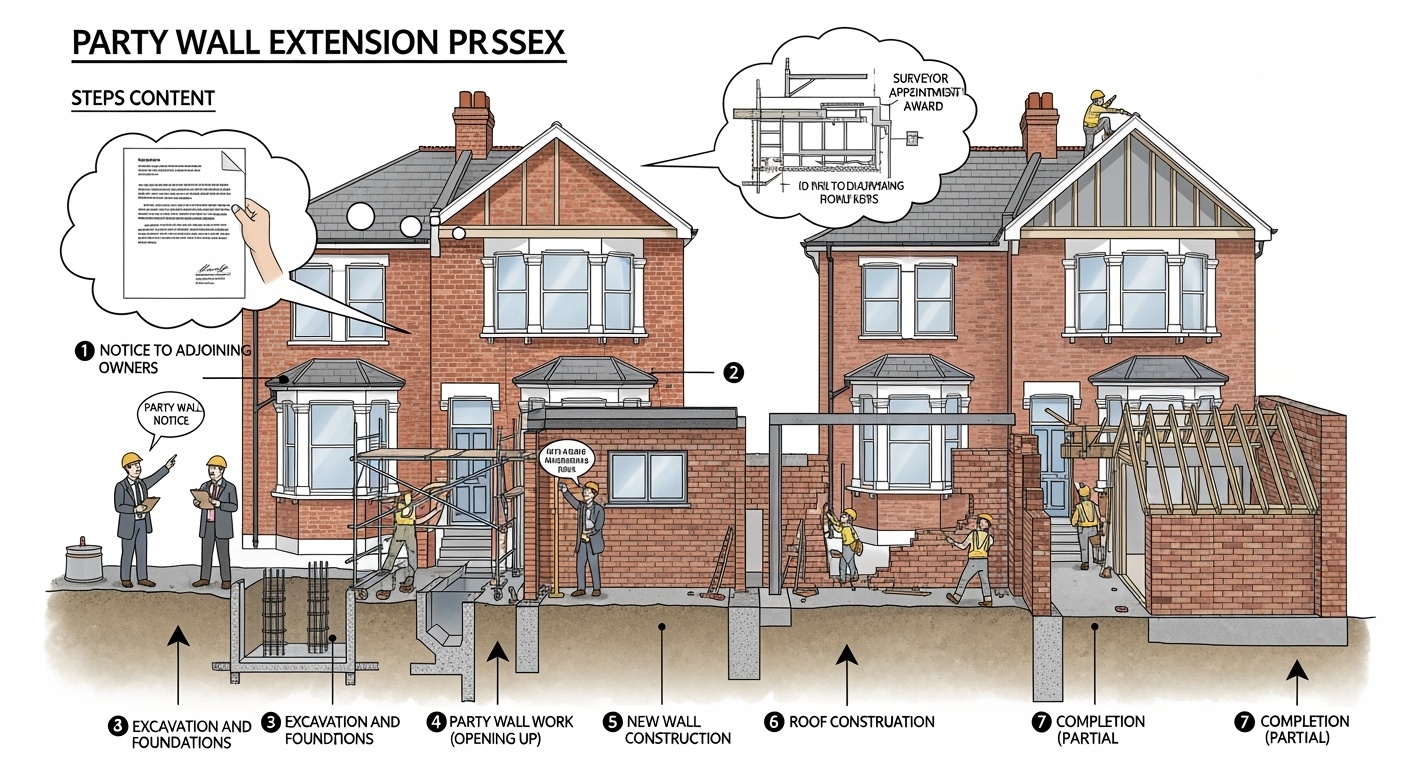
Visual guide to party wall procedures for Essex property extensions - from notices to completion
Planning an extension to your home in Chelmsford, Great Baddow, or elsewhere in Essex? Understanding the Party Wall Act 1996 is essential for avoiding costly disputes, project delays, and neighbour relations breakdown. As specialist party wall surveyors serving Essex for over 150 years, Chelmsford Surveyors have guided thousands of property owners through the party wall process, from simple single-storey extensions to complex multi-property developments.
The Party Wall Act 1996 provides a framework for preventing and resolving disputes between neighbours when building work affects party walls, boundary walls, or involves excavation near neighbouring properties. This comprehensive guide explains when you need party wall consent, how to navigate the process correctly, and what to expect during construction.
Understanding the Party Wall Act 1996
The Party Wall Act 1996 covers England and Wales, providing statutory procedures for notifying neighbours of building work that might affect shared structures or boundaries. The Act aims to balance property owners' development rights with neighbours' protection rights, creating a framework for managing construction projects that cross property boundaries.
Key Principles of the Act
The legislation establishes several fundamental principles:
- Right to build: Property owners have the right to develop their land, subject to planning and building regulations
- Neighbour protection: Adjoining owners must be notified and their interests protected during building work
- Dispute resolution: Formal procedures exist for resolving disagreements about proposed work
- Cost allocation: Building owners typically bear the costs of party wall procedures and any necessary protective measures
When Does the Party Wall Act Apply?
The Party Wall Act applies to three main categories of building work, each with specific notice requirements and procedures. Understanding these categories helps determine whether your Essex extension project requires party wall consent.
Section 1: New Building on the Boundary Line
This section covers construction of new walls directly on the boundary between properties. Common examples in Essex include:
- Building a new boundary wall between gardens
- Constructing garage or outbuilding walls on the property line
- Creating party fence walls between adjacent properties
In our experience with Chelmsford properties, Section 1 notices are relatively uncommon, as most extensions are built entirely within the building owner's land. However, they become relevant when maximising site usage requires construction exactly on the boundary line.
Section 2: Work to Existing Party Structures
Section 2 covers alterations to existing party walls, party fence walls, or party structures. This is the most common category for Essex residential extensions and includes:
Structural Alterations
- Cutting into party walls for beam insertions or steel frame installations
- Raising party walls to accommodate roof extensions or loft conversions
- Underpinning party walls for basement or foundation work
- Inserting damp-proof courses in shared walls
Surface Treatments
- Cutting chases for services (electricity, plumbing, gas)
- Removing or adding wall finishes that affect the party wall structure
- Weatherproofing work affecting both properties
Victorian and Edwardian terraces in Chelmsford frequently require Section 2 notices when homeowners extend into loft spaces or add rear extensions that involve party wall modifications.
Section 6: Excavation Near Neighbouring Buildings
Section 6 addresses excavation work that might affect neighbouring properties' foundations or stability. This category includes:
Category A: Excavation Within 3 Metres
Excavating within 3 metres of a neighbouring building where the excavation will go deeper than the neighbour's foundations.
Category B: Excavation Within 6 Metres
Excavating within 6 metres of a neighbouring building where the excavation will go deeper than a line drawn at 45 degrees from the bottom of the neighbour's foundations.
Section 6 notices are increasingly common in Essex as homeowners add basements, install substantial foundations for extensions, or excavate for swimming pools and underground facilities.
The Party Wall Notice Process: Step-by-Step Guide
Successful party wall procedures require careful planning, accurate documentation, and adherence to statutory timescales. Our experience managing party wall matters throughout Essex demonstrates the importance of following correct procedures from the outset.
Step 1: Initial Assessment and Planning
Before serving party wall notices, conduct thorough assessment of your proposed work:
Determine Notice Requirements
- Review architectural plans to identify party walls and boundaries
- Assess excavation depths relative to neighbouring foundations
- Identify all potentially affected neighbouring properties
- Consider cumulative effects of different work elements
Engage Professional Advice
Party wall procedures involve complex technical and legal considerations. Professional party wall surveyors provide:
- Accurate assessment of notice requirements
- Proper notice preparation and service
- Technical expertise for complex construction scenarios
- Dispute resolution and negotiation experience
Step 2: Preparing and Serving Notices
Party wall notices must contain specific information and be served correctly to comply with the Act.
Notice Content Requirements
Effective notices must include:
- Clear description of proposed work
- Accurate plans and technical drawings
- Proposed commencement date (minimum notice periods apply)
- Contact details for the building owner or their surveyor
Service Requirements
Notices must be served:
- On all adjoining owners (including leaseholders in some circumstances)
- At least one month before commencement for Section 1 work
- At least two months before commencement for Section 2 and Section 6 work
- By hand delivery, recorded delivery, or other approved methods
Step 3: Neighbour Response and Outcomes
Adjoining owners have three options when they receive party wall notices:
Option 1: Consent to the Work
If neighbours consent in writing, work can proceed without further party wall procedures. However, consent doesn't eliminate the building owner's liability for damage caused by the work.
Option 2: Consent with Conditions
Neighbours may consent subject to specific conditions, such as:
- Particular construction methods or timing restrictions
- Additional protective measures or monitoring
- Specific repair or reinstatement requirements
Option 3: Dissent or No Response
If neighbours dissent or don't respond within 14 days, a "deemed dispute" arises, triggering the formal dispute resolution process.
Step 4: Appointing Party Wall Surveyors
When disputes arise, the Act provides for surveyor appointment to resolve matters through a Party Wall Award.
Surveyor Selection Options
Parties can choose between:
- Agreed Surveyor: Both parties agree on a single surveyor to act impartially
- Two Surveyors: Each party appoints their own surveyor, who together resolve the dispute
Surveyor Qualifications and Duties
Party wall surveyors should possess:
- Relevant qualifications in surveying, architecture, or engineering
- Experience in party wall procedures and construction matters
- Detailed knowledge of the Act and related case law
- Professional indemnity insurance coverage
The Party Wall Award Process
Party Wall Awards are legal documents that set out the rights and responsibilities of both parties, enabling work to proceed while protecting neighbours' interests.
Award Content and Provisions
Comprehensive Party Wall Awards typically address:
Work Description and Methodology
- Detailed description of permitted work
- Construction methods and sequencing requirements
- Hours of work and access arrangements
- Health and safety considerations
Protective Measures
- Structural protection requirements
- Monitoring and inspection procedures
- Vibration and noise control measures
- Dust and debris management
Rights and Obligations
- Access rights for construction and inspection
- Repair and reinstatement obligations
- Insurance and security requirements
- Dispute resolution procedures
Schedule of Condition
Party Wall Awards typically require preparation of a Schedule of Condition, documenting the pre-work condition of adjoining properties. This crucial document:
- Provides baseline evidence for damage claims
- Protects both parties' interests
- Facilitates post-work condition assessment
- Supports insurance and legal proceedings if necessary
Our surveys regularly prepare detailed Schedules of Condition for Essex properties, using photography, technical descriptions, and measured surveys to document existing conditions accurately.
Common Party Wall Scenarios in Essex
Essex property characteristics create typical party wall scenarios that homeowners encounter during extension projects.
Victorian Terrace Extensions
Victorian terraces throughout Chelmsford commonly require party wall procedures for:
Rear Extensions
- Single-storey kitchen extensions affecting party walls
- Multi-storey extensions requiring party wall raising
- Basement extensions involving excavation near neighbours
Loft Conversions
- Party wall raising for dormer windows or roof extensions
- Steel beam insertions through party walls
- Structural alterations for staircase access
Semi-Detached House Projects
Semi-detached properties in areas like Great Baddow typically involve:
- Side return extensions affecting the party wall
- Garage conversions with party wall implications
- Two-storey extensions requiring structural modifications
Modern Development Extensions
Contemporary properties in developments like Chelmer Village may require party wall procedures for:
- Extensions on tightly-spaced plots
- Garden room or office constructions near boundaries
- Swimming pools or basement installations
Managing Costs and Timescales
Party wall procedures involve costs and timescales that must be factored into extension projects.
Typical Costs
Professional Fees
Party wall surveyor costs vary depending on project complexity:
- Simple procedures: £800-1,500 for straightforward residential extensions
- Complex projects: £2,000-5,000 for multi-property or commercial developments
- Disputed matters: Additional costs for extended negotiations or formal procedures
Additional Expenses
- Schedule of Condition preparation: £300-800 per property
- Structural monitoring during construction: £200-500
- Remedial works if damage occurs: Variable depending on extent
Project Timescales
Party wall procedures add time to extension projects:
- Minimum notice periods: 1-2 months before commencement
- Award preparation: 2-4 weeks for straightforward cases
- Complex negotiations: 6-12 weeks for disputed or complicated matters
Early engagement with party wall surveyors helps minimise delays and ensures procedures run parallel with planning and building regulation processes.
Avoiding Common Pitfalls
Our experience managing party wall matters throughout Essex reveals common mistakes that can cause delays, increase costs, and damage neighbour relations.
Planning and Preparation Errors
- Late engagement: Waiting until planning permission is granted before considering party wall requirements
- Inadequate assessment: Failing to identify all affected neighbours or work categories
- Poor communication: Not discussing plans informally with neighbours before formal notices
Notice and Procedure Mistakes
- Incorrect service: Serving notices on wrong parties or using inappropriate methods
- Insufficient detail: Notices lacking necessary technical information or accurate plans
- Timing errors: Serving notices too late or with incorrect commencement dates
Construction Phase Issues
- Award non-compliance: Failing to follow Award conditions during construction
- Access disputes: Inadequate arrangements for surveyor inspections or neighbour access
- Damage management: Poor response to construction damage or neighbour complaints
Best Practices for Successful Party Wall Procedures
Successful party wall management requires proactive planning, professional expertise, and effective communication.
Early Planning and Professional Engagement
- Engage party wall surveyors during design development, not just before construction
- Consider party wall implications when selecting architects and contractors
- Budget for party wall costs and timescales from project outset
- Coordinate party wall procedures with planning and building regulation submissions
Neighbour Relations Management
- Discuss extension plans informally with neighbours before serving formal notices
- Address concerns proactively and consider reasonable modifications
- Maintain regular communication throughout the process
- Provide clear contact details and respond promptly to queries
Quality Professional Support
- Select experienced party wall surveyors with local knowledge
- Ensure surveyors have appropriate qualifications and insurance
- Brief contractors thoroughly on Award requirements and procedures
- Maintain professional standards throughout the construction process
Dispute Resolution and Problem Management
Despite careful planning, party wall disputes can arise during construction. Effective dispute resolution protects relationships and project progress.
Common Dispute Types
Technical Disagreements
- Construction methodology disputes
- Structural adequacy concerns
- Safety and protection measure disagreements
Procedural Issues
- Access and timing disputes
- Communication and notification problems
- Award interpretation disagreements
Damage Claims
- Construction-related property damage
- Inconvenience and disturbance claims
- Repair and reinstatement disputes
Resolution Strategies
Effective dispute resolution involves:
- Early intervention: Addressing issues before they escalate
- Professional mediation: Using experienced party wall surveyors to facilitate resolution
- Technical solutions: Finding practical compromises that meet both parties' needs
- Legal compliance: Ensuring all actions comply with statutory requirements
Future Developments and Changes
The party wall landscape continues evolving with legal developments, construction innovation, and changing property market conditions.
Legal and Regulatory Changes
- Case law developments affecting party wall interpretation
- Electronic service and communication methods
- Integration with planning and building regulation processes
Technology Integration
- Digital monitoring and condition assessment tools
- Virtual surveying and inspection methods
- Electronic Award preparation and management systems
Conclusion: Professional Party Wall Management
The Party Wall Act 1996 provides essential protection for property owners throughout Essex while enabling development and improvement of residential and commercial properties. Success depends on understanding statutory requirements, engaging appropriate professional advice, and managing neighbour relationships effectively.
Whether planning a single-storey kitchen extension in Chelmsford, a loft conversion in Great Baddow, or a complex multi-property development, professional party wall surveyor advice ensures compliance, protects all parties' interests, and minimises disputes and delays.
Key success factors include:
- Early planning: Considering party wall requirements during design development
- Professional expertise: Engaging qualified, experienced party wall surveyors
- Neighbour relations: Maintaining open, honest communication throughout the process
- Compliance focus: Following statutory procedures and Award conditions carefully
The complexity of modern construction projects and evolving legal requirements make professional party wall advice essential for successful extension projects. Chelmsford Surveyors' experience managing party wall matters throughout Essex provides the expertise and local knowledge necessary for smooth, compliant procedures that protect all parties' interests.
Remember: party wall procedures exist to facilitate development while protecting neighbours' rights. Professional management ensures your extension project proceeds smoothly, maintains good neighbourly relations, and complies fully with statutory requirements.
Written by
James Robertson, MRICS
Senior Surveyor & Party Wall Specialist
Need party wall advice?
Get Free Consultation