The Complete Guide to Building Surveys in 2025: What Every Property Buyer in Essex Needs to Know
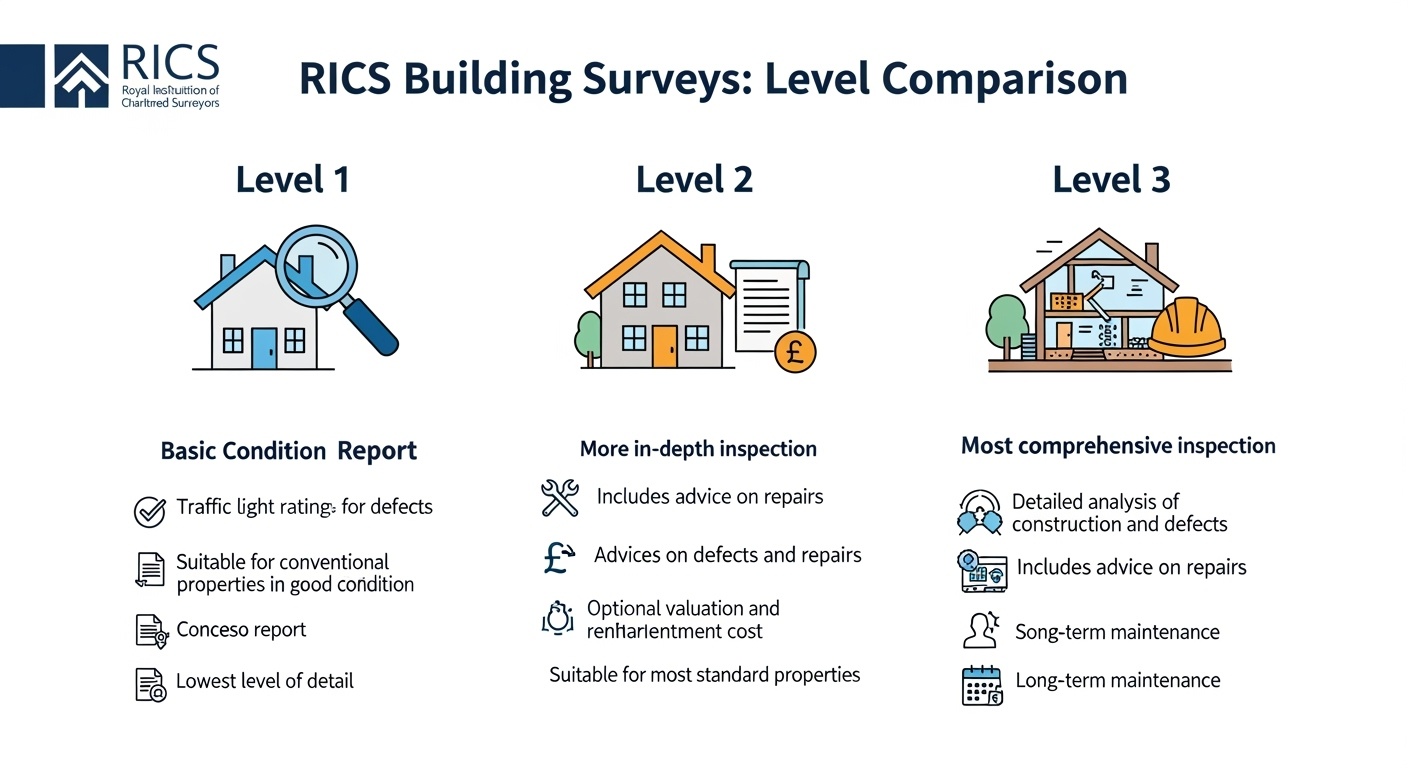
Interactive guide to RICS survey levels - helping Essex property buyers choose the right survey type
Whether you're purchasing a Victorian terrace in Chelmsford city centre, a character cottage in Great Baddow, or a modern development in Chelmer Village, understanding building surveys is crucial for making informed property decisions. As chartered surveyors serving Essex for over 150 years, we've seen how the right survey can save buyers thousands of pounds and provide invaluable peace of mind.
🏠 Quick Survey Selector for Essex Properties
- Victorian/Edwardian homes: RICS Level 3 Building Survey recommended
- 1930s-1980s properties: RICS Level 2 HomeBuyer Report suitable
- New builds (under 10 years): RICS Level 1 Condition Report adequate
- Listed buildings: Always choose Level 3 with specialist advice
In 2025, building surveys have evolved significantly with new technologies and methodologies. This comprehensive guide will help you navigate the surveying landscape, understand your options, and make the best choice for your property purchase in Essex.
Understanding RICS Survey Levels: Making the Right Choice
The Royal Institution of Chartered Surveyors (RICS) has established standardised survey levels to help property buyers choose the most appropriate inspection for their needs. Each level serves different purposes and property types.
RICS Level 1: Condition Report
The most basic survey option, Level 1 reports are typically used for new-build properties or recently constructed homes in excellent condition. These surveys provide a simple overview using a traffic light system (red, amber, green) to indicate the condition of different elements.
Best for:
- New-build properties less than 10 years old
- Properties in excellent condition
- Modern apartments in developments like Chelmer Village
- Budget-conscious buyers requiring basic peace of mind
RICS Level 2: HomeBuyer Report
The most popular choice for Essex property buyers, Level 2 surveys suit the majority of conventional properties built within the last 100 years. This survey provides detailed information about the property's condition, highlighting urgent defects and potential problems.
Our experience with properties throughout Chelmsford and Essex shows that Level 2 surveys are ideal for:
- Victorian and Edwardian terraces in Chelmsford city centre
- 1930s semi-detached houses in Great Baddow
- Post-war properties in Springfield and Broomfield
- Properties requiring mortgage valuations
The Level 2 report includes a market valuation, making it cost-effective for buyers requiring both survey and valuation services. This is particularly valuable in the current Essex property market, where accurate valuations are essential for mortgage applications and negotiation strategies.
RICS Level 3: Building Survey
The most comprehensive survey available, Level 3 provides detailed analysis of a property's construction, condition, and maintenance requirements. This thorough inspection is essential for older, unusual, or complex properties common throughout Essex's historic towns and villages.
Recommended for:
- Listed buildings and period properties in Writtle
- Properties over 100 years old
- Buildings with unusual construction methods
- Properties requiring significant renovation
- Commercial buildings and mixed-use developments
In our experience surveying properties throughout Essex, Level 3 surveys often reveal issues that could cost tens of thousands to rectify. For a Tudor cottage in Writtle or a Georgian townhouse in Chelmsford, this detailed analysis is invaluable.
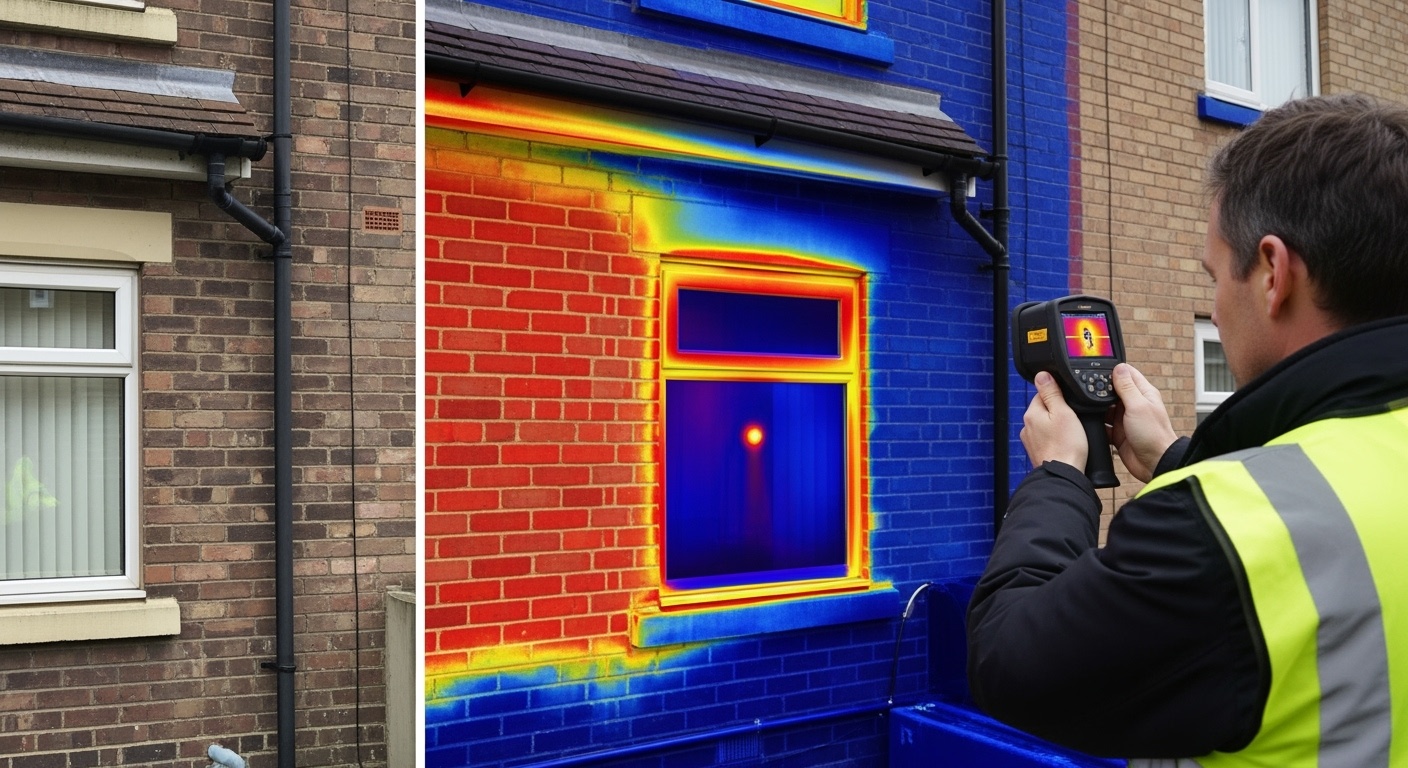
Advanced thermal imaging reveals hidden defects invisible to traditional survey methods - essential for Essex Victorian properties
Revolutionary Technology in Modern Surveys
The surveying industry has embraced cutting-edge technology to provide more accurate, comprehensive, and efficient property assessments. At Chelmsford Surveyors, we've invested heavily in advanced equipment to deliver superior results for our Essex clients.
💡 Technology Impact Statistics
Thermal Imaging: Revealing Hidden Defects
Thermal imaging cameras have revolutionised building surveys by revealing problems invisible to conventional inspection methods. These sophisticated devices detect temperature variations that indicate:
- Hidden damp and water ingress: Moisture creates distinctive thermal patterns, revealing leaks behind walls, under floors, and within roof structures
- Insulation defects: Poor or missing insulation shows as heat loss patterns, crucial for energy efficiency assessments
- Structural issues: Thermal bridging and air leakage patterns can indicate structural problems
- Electrical faults: Overheating circuits and electrical issues become visible through thermal signatures
We regularly use thermal imaging on Victorian properties in Chelmsford, where traditional construction methods and age-related deterioration can create hidden problems. A recent survey of a 1890s terrace revealed extensive damp penetration that conventional inspection had missed, saving our client over £15,000 in unexpected repair costs.
Drone Surveys: Accessing the Inaccessible
Drone technology enables detailed inspection of roof areas, chimney stacks, and high-level building elements without expensive scaffolding or access equipment. This is particularly valuable for:
- Multi-storey properties with complex roof structures
- Commercial buildings with extensive roof areas
- Properties where traditional access is difficult or dangerous
- Detailed photographic documentation of roof condition
Our drone surveys provide high-resolution imagery and video documentation, enabling detailed analysis of roof coverings, flashings, gutters, and chimney conditions. This technology is especially valuable for period properties in areas like Great Baddow, where roof access can be challenging.
3D Laser Scanning: Precision Measurement and Documentation
Advanced laser scanning creates precise three-dimensional models of properties, providing accurate measurements and detailed spatial documentation. This technology supports:
- Accurate floor plans and elevation drawings
- Structural movement analysis
- Extension and renovation planning
- Insurance and legal documentation
Understanding Survey Reports: Key Elements and Interpretation
Survey reports can appear daunting, but understanding their structure and terminology helps buyers make informed decisions. Modern RICS reports follow standardised formats designed for clarity and accessibility.
The Traffic Light System
RICS surveys use a simple colour-coded system:
- Green (1): No repair currently needed. Normal maintenance required.
- Amber (2): Defects requiring future attention, but estimates are still advised.
- Red (3): Urgent defects requiring immediate attention or further investigation.
Understanding this system helps prioritise issues and budget for necessary work. In Essex properties, common amber ratings include routine roof maintenance, exterior decoration needs, and garden boundary repairs.
Common Essex Property Issues
Our extensive experience surveying properties throughout Essex has identified recurring issues specific to the region:
Victorian Properties (1837-1901)
Victorian homes are abundant in Chelmsford and surrounding areas. Common survey findings include:
- Structural movement: Settlement cracks, particularly around bay windows and extensions
- Damp issues: Rising damp, penetrating damp, and condensation problems
- Roof deterioration: Slate and tile slippage, lead work failures, guttering issues
- Original features: Sash window deterioration, original plasterwork damage
Edwardian Properties (1901-1910)
Popular in areas like Great Baddow, Edwardian properties typically feature:
- Bay window issues: Structural movement and weathering problems
- Roof concerns: Clay tile deterioration and valley gutter problems
- Chimney conditions: Pointing deterioration and stack stability issues
- Garden walls: Boundary wall stability and gate post problems
Modern Developments (Post-1990)
Contemporary properties in areas like Chelmer Village may exhibit:
- Building defects: Poor workmanship issues within warranty periods
- System failures: Heating, ventilation, and electrical system problems
- External envelope: Render systems and window sealing issues
- Garden drainage: Surface water management problems
Survey Costs and Value: Investment in Peace of Mind
Survey costs vary depending on property size, complexity, and survey level. However, the investment typically represents a tiny fraction of the purchase price while potentially saving thousands in unexpected repair costs.
Typical Essex Survey Costs (2025)
- Level 1 (Condition Report): £400-600 for typical residential properties
- Level 2 (HomeBuyer Report): £600-900 for houses up to £500,000 value
- Level 3 (Building Survey): £800-1,500 depending on property size and complexity
Additional services like thermal imaging, drone surveys, or specialist inspections may incur extra charges, but these often provide exceptional value by identifying problems that conventional surveys might miss.
Return on Investment
Our surveys regularly identify issues that save clients significant costs:
- A recent Chelmsford Victorian terrace survey revealed subsidence signs, enabling renegotiation that saved £25,000
- Thermal imaging on a Great Baddow property identified hidden roof leak damage worth £8,000 in repairs
- A Writtle cottage survey found electrical safety issues requiring £5,000 rewiring work
Choosing Your Surveyor: Essential Considerations
Selecting the right surveyor is crucial for obtaining accurate, valuable advice. Consider these factors when choosing your surveyor:
Professional Qualifications
Ensure your surveyor holds appropriate RICS qualifications:
- FRICS (Fellow): Senior level with extensive experience
- MRICS (Member): Fully qualified chartered surveyor
- AssocRICS (Associate): Technical level, suitable for basic surveys
Local Knowledge
Essex-specific knowledge is invaluable for understanding:
- Local building styles and construction methods
- Regional geological conditions and common problems
- Planning constraints and conservation area requirements
- Local property market conditions and values
Technology and Equipment
Modern surveyors should offer:
- Thermal imaging capabilities
- Drone survey options
- Digital reporting systems
- Photographic documentation
Post-Survey Actions: Making the Most of Your Report
Receiving your survey report is just the beginning. Here's how to maximise its value:
Immediate Actions
- Review thoroughly: Read the entire report, not just the summary
- Prioritise issues: Focus on red-rated urgent items first
- Seek clarification: Contact your surveyor for explanation of technical terms
- Obtain quotations: Get repair costs for significant defects
Negotiation Strategies
Use survey findings to:
- Renegotiate the purchase price based on repair costs
- Request vendor repairs before completion
- Adjust completion timescales to accommodate necessary work
- Secure retention funds for post-completion repairs
Future Trends in Building Surveys
The surveying industry continues evolving with technological advances and changing client expectations:
Artificial Intelligence Integration
AI analysis of survey data promises:
- Pattern recognition for common defects
- Predictive maintenance recommendations
- Automated report generation
- Enhanced defect identification
Environmental Assessments
Increasing focus on:
- Energy efficiency evaluations
- Carbon footprint assessments
- Sustainability ratings
- Climate change adaptation measures
Conclusion: Investing in Professional Surveying
Building surveys represent one of the most valuable investments you'll make during property purchase. The cost of a comprehensive survey pales in comparison to the potential savings from identifying hidden defects, negotiating price reductions, or avoiding problematic properties entirely.
As Essex property prices continue rising, the importance of professional surveying advice becomes even more critical. Whether you're purchasing a Victorian terrace in Chelmsford, a period cottage in Great Baddow, or a modern apartment in Chelmer Village, professional surveying provides the knowledge and confidence needed for successful property transactions.
The surveying industry's technological advances mean 2025 surveys offer unprecedented insight into property condition and future maintenance requirements. Thermal imaging reveals hidden problems, drone technology provides comprehensive roof assessments, and digital reporting delivers clear, actionable information.
Choose your surveyor carefully, considering qualifications, local knowledge, and technological capabilities. A comprehensive survey from experienced Essex surveyors provides invaluable peace of mind and often saves many times its cost through identified issues and negotiation opportunities.
Remember: property purchase is likely your largest investment. Professional surveying advice ensures you make informed decisions with confidence, protecting your investment and your family's future.
Written by
Richard Thompson, FRICS
Senior Partner, Chelmsford Surveyors
Need a survey?
Get Free Quote