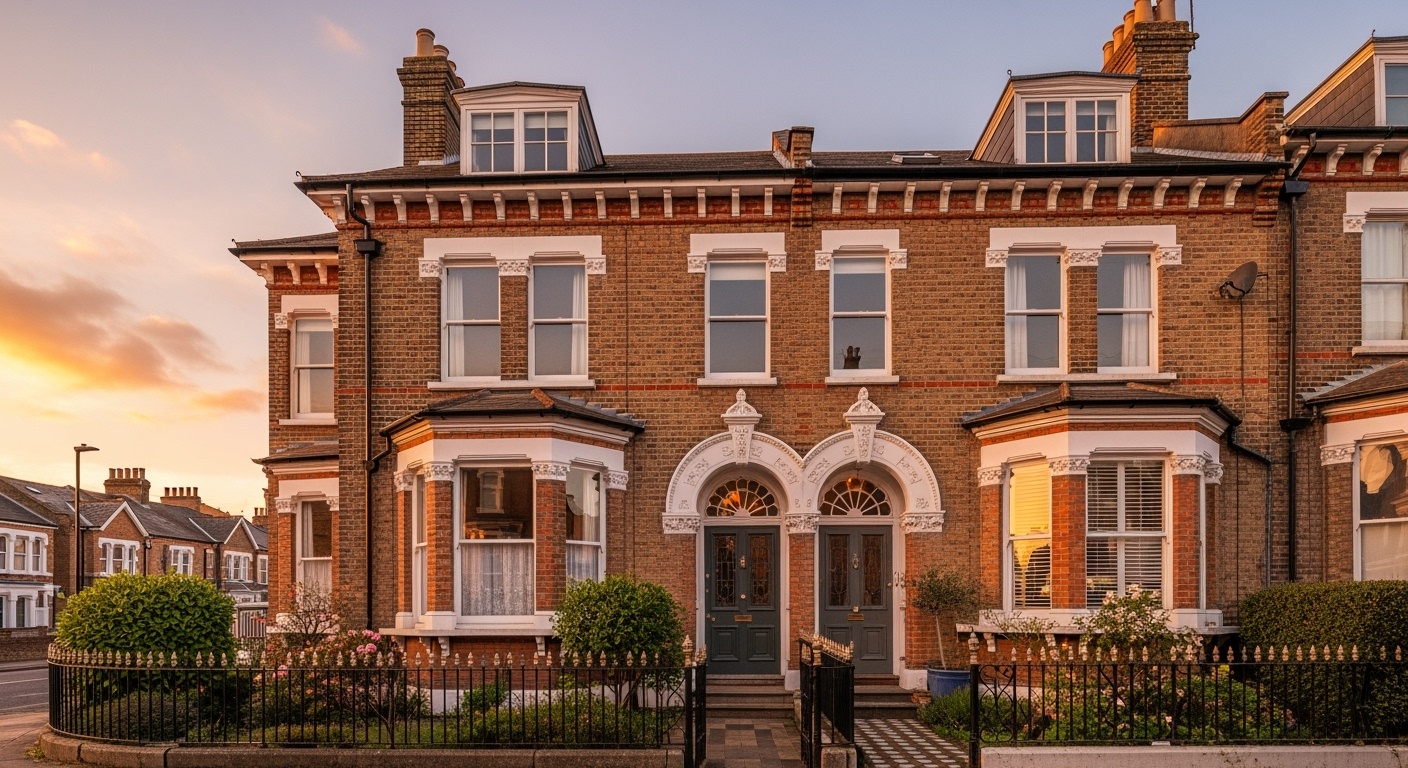
Victorian houses are abundant throughout Chelmsford, offering unique character and architectural charm that modern properties simply cannot replicate. However, buying a Victorian property in Essex requires careful consideration of age-related issues, structural peculiarities, and modernisation requirements that can significantly impact your purchase decision and future costs.
As RICS chartered surveyors specialising in Essex properties, we've surveyed hundreds of Victorian houses across Chelmsford, Great Baddow, and surrounding areas. This comprehensive guide shares our expert insights into common issues, survey priorities, and essential considerations when purchasing these characterful homes built between 1837 and 1901.
Contents
- Understanding Victorian Architecture in Chelmsford
- Common Structural Issues in Victorian Houses
- Damp and Moisture Problems
- Roof and Chimney Concerns
- Electrical and Plumbing Modernisation
- Insulation and Energy Efficiency
- Survey Priorities for Victorian Properties
- Renovation and Modernisation Considerations
- Expert Recommendations
Understanding Victorian Architecture in Chelmsford
Victorian Era Context
Victorian houses in Chelmsford were built during a period of rapid expansion following the railway's arrival in 1843. The Great Eastern Railway's workshops and growing commercial importance attracted middle-class families, leading to substantial residential development between 1850-1900.
Typical Chelmsford Victorian Features
- Red brick construction with yellow brick detailing
- Bay windows on ground and first floors
- Sash windows with decorative glazing bars
- Steep-pitched slate roofs with clay ridge tiles
- Multiple chimney stacks with ornate pots
- Front gardens with original boundary walls
Construction Methods
- Solid wall construction (typically 225mm thick)
- Lime mortar pointing allowing wall breathability
- Suspended timber floors with airbricks for ventilation
- Lath and plaster walls on timber framework
- Lead-lined box gutters and cast iron downpipes
Interactive Victorian House Features Guide
Exterior Features
Click to explore Victorian exterior characteristics
Interior Layout
Discover typical Victorian room arrangements
Structural Elements
Learn about Victorian construction methods
Common Structural Issues in Victorian Houses
Foundation and Settlement Issues
- Shallow foundations: Victorian houses often have foundations of just 2-3 feet depth, making them susceptible to settlement on clay soils common in Essex
- Subsidence risk: Areas like Great Baddow with shrinkable clay can cause differential settlement, particularly during dry summers
- Tree root damage: Mature trees near Victorian properties can cause foundation movement through root expansion or soil shrinkage
Wall and Masonry Problems
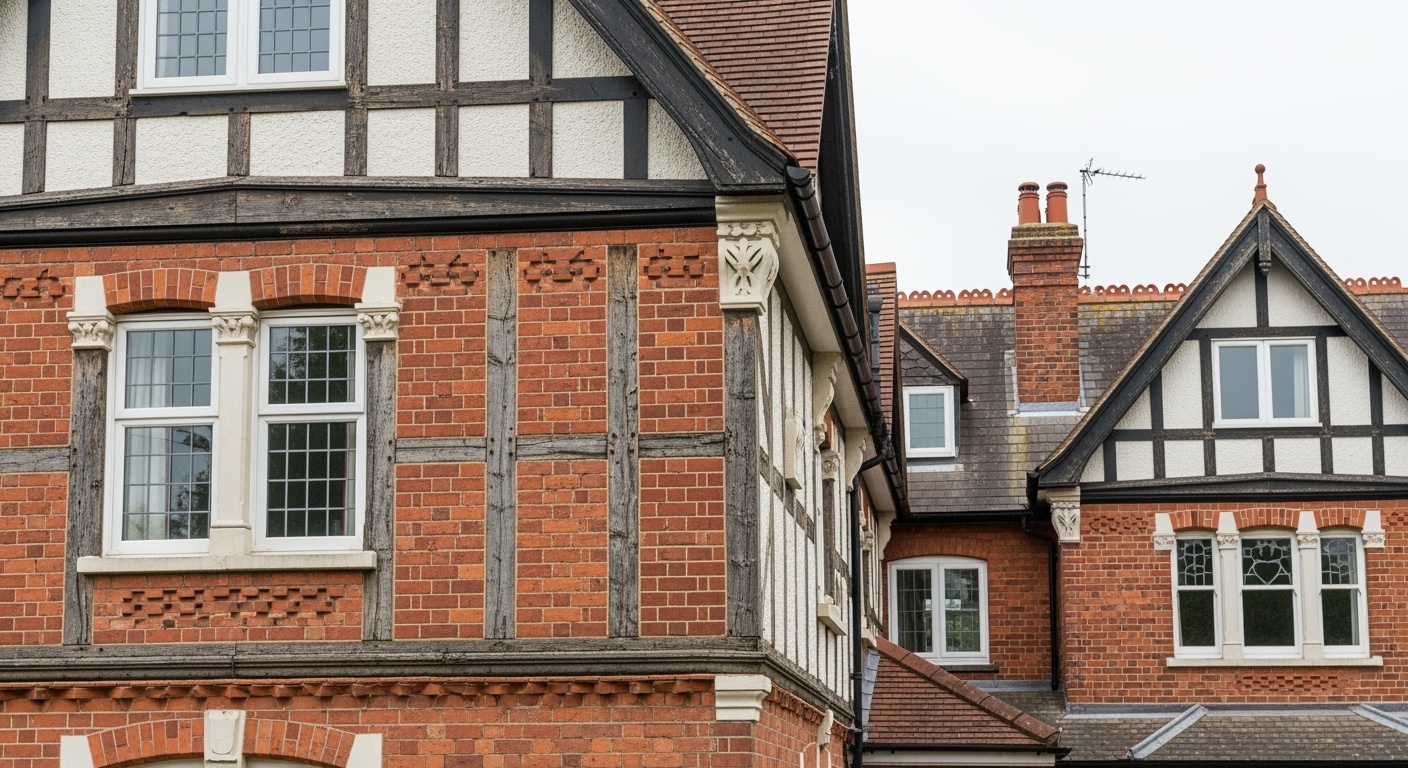
- Pointing deterioration: Original lime mortar requires regular maintenance; cement re-pointing can trap moisture and damage bricks
- Brick spalling: Essex's freeze-thaw cycles can cause Victorian bricks to crack and face, particularly on north-facing elevations
- Structural alterations: Modern modifications may have removed load-bearing walls without proper support beams
Timber and Joinery Issues
Floor Structure Problems:
- • Woodworm in floor joists and floorboards
- • Dry rot from poor ventilation or leaks
- • Sagging floors due to oversized spans
- • Missing or blocked airbricks causing damp
Window and Door Issues:
- • Sash cord failure in sliding windows
- • Rot in window cills and frames
- • Loose or missing putty glazing
- • Warped doors and frames from movement
Damp and Moisture Problems
Why Victorian Houses Are Prone to Damp
Victorian houses were designed to "breathe" naturally through lime mortar and solid walls. Modern interventions like cement pointing, plastic paints, and cavity wall insulation can disrupt this natural moisture management, leading to damp problems that weren't present in the original design.
Rising Damp
Ground moisture rising through walls due to failed or absent damp-proof course (DPC).
- • Tide marks on internal walls
- • Salt crystallisation on surfaces
- • Musty odours in ground floor rooms
- • Wallpaper peeling at skirting level
Penetrating Damp
Water penetration through external walls, particularly during Essex's heavy winter rainfall.
- • Damp patches after rain
- • Staining around windows
- • Wet patches on chimney breasts
- • Mould growth on external walls
Condensation
Modern lifestyle factors creating excess moisture in traditionally ventilated Victorian homes.
- • Mould in corners and behind furniture
- • Steamed up windows
- • Water droplets on cold surfaces
- • Musty smells in bedrooms
Common Causes in Chelmsford Victorian Properties
External Factors:
- • Blocked or damaged gutters and downpipes
- • Leaking roof tiles or flashings
- • Raised ground levels against external walls
- • Poor drainage around the property
- • Ivy or vegetation against walls
Internal Factors:
- • Blocked or covered airbricks
- • Leaking plumbing behind walls
- • Poor ventilation from modern sealed windows
- • Cement pointing trapping moisture
- • Modern impermeable wall treatments
Roof and Chimney Concerns
Victorian roofs in Chelmsford typically feature steep-pitched Welsh slate covering with clay ridge tiles and multiple chimney stacks. While these roofs were built to last, age-related deterioration and modern modifications can create significant issues that require careful assessment during purchase.
Slate Roof Issues
Nail Sickness
Victorian slates were fixed with iron nails which rust over time, causing slates to slip. This is particularly common in Chelmsford properties approaching 120+ years old.
Frost Damage
Essex's freeze-thaw cycles can cause Welsh slates to delaminate, creating weak spots that may fail during storms.
Ridge Tile Movement
Clay ridge tiles may become loose due to mortar deterioration, allowing water penetration and heat loss.
Chimney Problems
Stack Condition
Multiple chimney stacks are susceptible to pointing failure, stack lean, and pot displacement from Essex's prevailing winds.
Flashing Failure
Lead flashings around chimney bases commonly fail, allowing water penetration into roof timbers and upper floor ceilings.
Unused Chimneys
Capped or unused chimneys may lack proper ventilation, leading to condensation issues and internal damp problems.
Critical Roof Survey Points
Structural Assessment:
- • Rafter and purlin condition
- • Ridge board stability
- • Wall plate bearing
- • Roof spread indicators
Weather Protection:
- • Slate security and condition
- • Gutter and downpipe capacity
- • Flashing and weathering details
- • Ventilation adequacy
Safety Considerations:
- • Chimney stack stability
- • Access ladder condition
- • Roof light security
- • Parapet wall condition
Electrical and Plumbing Modernisation
Victorian houses in Chelmsford were built long before modern electrical and plumbing systems. Today's safety standards and lifestyle requirements often necessitate complete rewiring and plumbing upgrades, which can represent significant additional costs for buyers.
Electrical System Considerations
Common Issues Found:
- • Outdated fuse boxes requiring consumer unit replacement
- • Cloth or rubber-insulated wiring from 1950s-70s rewiring
- • Inadequate earthing systems for modern safety standards
- • Insufficient socket provision for contemporary needs
- • Missing RCD protection for bathroom circuits
Upgrade Requirements:
- • Complete rewiring with modern PVC-insulated cables
- • New consumer unit with MCBs and RCD protection
- • Adequate socket provision throughout property
- • Proper earthing and bonding to water/gas services
- • Electrical Installation Condition Report (EICR) required
Plumbing System Updates
Typical Victorian Plumbing:
- • Lead supply pipes requiring replacement
- • Cast iron soil and waste pipes
- • Galvanised steel hot water pipes
- • External toilets or later internal conversions
- • Gravity-fed systems with header tanks
Modernisation Needs:
- • New copper or plastic supply pipework
- • Modern plastic soil and waste systems
- • Combination boiler installation
- • Additional bathrooms or shower rooms
- • Kitchen modernisation with new plumbing runs
Cost Planning for Services Upgrades
Based on our experience with Chelmsford Victorian properties, typical modernisation costs include:
Electrical Rewiring:
- • 2-bed terrace: £4,000-£6,000
- • 3-bed semi: £5,000-£8,000
- • 4-bed detached: £7,000-£12,000
- • Additional costs for decoration
Plumbing Upgrade:
- • New boiler: £2,000-£4,000
- • Complete repipe: £3,000-£6,000
- • Bathroom suite: £2,000-£8,000
- • Kitchen plumbing: £1,000-£3,000
Combined Benefits:
- • Enhanced safety and reliability
- • Improved energy efficiency
- • Higher property value
- • Modern lifestyle compatibility
Survey Priorities for Victorian Properties
When commissioning a building survey for a Victorian house in Chelmsford, certain areas require particular attention due to the age and construction methods of these properties. Our RICS surveyors recommend focusing on these critical aspects to ensure informed purchase decisions.
Essential RICS Level 3 Survey Points
Structural Foundation Assessment
Detailed examination of foundation adequacy, settlement indicators, and subsidence risk factors specific to Essex clay soils.
Roof Structure and Covering
Comprehensive roof inspection including timber condition, slate security, and chimney stability assessment.
Damp Investigation
Thorough moisture assessment using electronic meters and thermal imaging to identify rising, penetrating, and condensation damp.
Services Infrastructure
Assessment of electrical, plumbing, heating, and drainage systems with modernisation recommendations.
Specialist Investigations
Timber Condition Survey
Detailed inspection for woodworm, dry rot, and wet rot in floor joists, roof timbers, and structural elements.
Thermal Imaging Analysis
Advanced thermal imaging to reveal hidden defects, insulation gaps, and moisture problems invisible to visual inspection.
Electrical Installation Report
Professional EICR assessment of wiring condition, safety compliance, and upgrade requirements.
Energy Efficiency Assessment
EPC rating analysis with recommendations for insulation, heating, and energy efficiency improvements.
Red Flag Issues Requiring Immediate Attention
Structural Concerns:
- • Visible cracks wider than 5mm
- • Evidence of ongoing foundation movement
- • Bowed or bulging walls
- • Sagging roof lines or ridge displacement
- • Loose or leaning chimney stacks
Safety Issues:
- • Unsafe electrical installations
- • Asbestos-containing materials
- • Structural timber decay
- • Inadequate fire escape provision
- • Gas safety concerns
Professional Advice: Any red flag issues identified should prompt specialist consultation before proceeding with purchase. These may indicate significant cost implications or negotiation opportunities.
Expert Recommendations
Professional Opinion from Chelmsford Surveyors
"After surveying hundreds of Victorian properties throughout Chelmsford and Essex, we consistently find that well-maintained Victorian houses offer exceptional value, character, and longevity. However, buyers must approach these properties with realistic expectations about maintenance requirements and modernisation costs. The key to successful Victorian property ownership is understanding the building's original design intent and working with, rather than against, its natural characteristics."
Do's
- ✓ Commission a comprehensive RICS Level 3 survey
- ✓ Budget for immediate essential repairs
- ✓ Research the property's history and alterations
- ✓ Engage specialists for electrical/plumbing assessment
- ✓ Consider thermal imaging for hidden defects
- ✓ Plan modernisation in phases
- ✓ Preserve original features where possible
Don'ts
- ✗ Rely solely on basic valuation surveys
- ✗ Ignore signs of structural movement
- ✗ Use cement mortar on lime mortar walls
- ✗ Block original ventilation systems
- ✗ Remove character features impulsively
- ✗ Underestimate modernisation costs
- ✗ Rush into major alterations
Key Tips
- 💡 Victorian houses reward patient, sympathetic restoration
- 💡 Original materials often perform better than modern substitutes
- 💡 Proper maintenance prevents major problems
- 💡 Energy efficiency can be achieved sensitively
- 💡 Professional advice saves money long-term
- 💡 Character features add significant value
Why Choose Chelmsford Surveyors for Your Victorian Property Survey?
Specialist Victorian Expertise
- • Over 150 years combined experience with Essex period properties
- • RICS chartered surveyors with conservation specialisms
- • Deep understanding of local building materials and techniques
- • Established relationships with heritage contractors
Advanced Survey Technology
- • Thermal imaging cameras for hidden defect detection
- • Electronic moisture meters and hygrometers
- • Drone surveys for high-level roof inspection
- • Detailed photographic documentation
Conclusion: Making Informed Victorian Property Decisions
Victorian houses in Chelmsford represent some of Essex's most characterful and enduring residential architecture. While these properties require careful assessment and realistic budgeting for maintenance and modernisation, they offer unmatched charm, solid construction, and excellent long-term value potential.
The key to successful Victorian property ownership lies in understanding the building's original design philosophy and working sympathetically with its characteristics. Modern problems often arise from well-intentioned but inappropriate interventions that disrupt the building's natural behaviour.
By commissioning a comprehensive RICS Level 3 survey and engaging specialists where necessary, you can make informed decisions about purchase price, renovation priorities, and long-term maintenance strategies. Remember that Victorian properties reward patient, knowledgeable ownership with decades of comfortable living and strong capital appreciation.