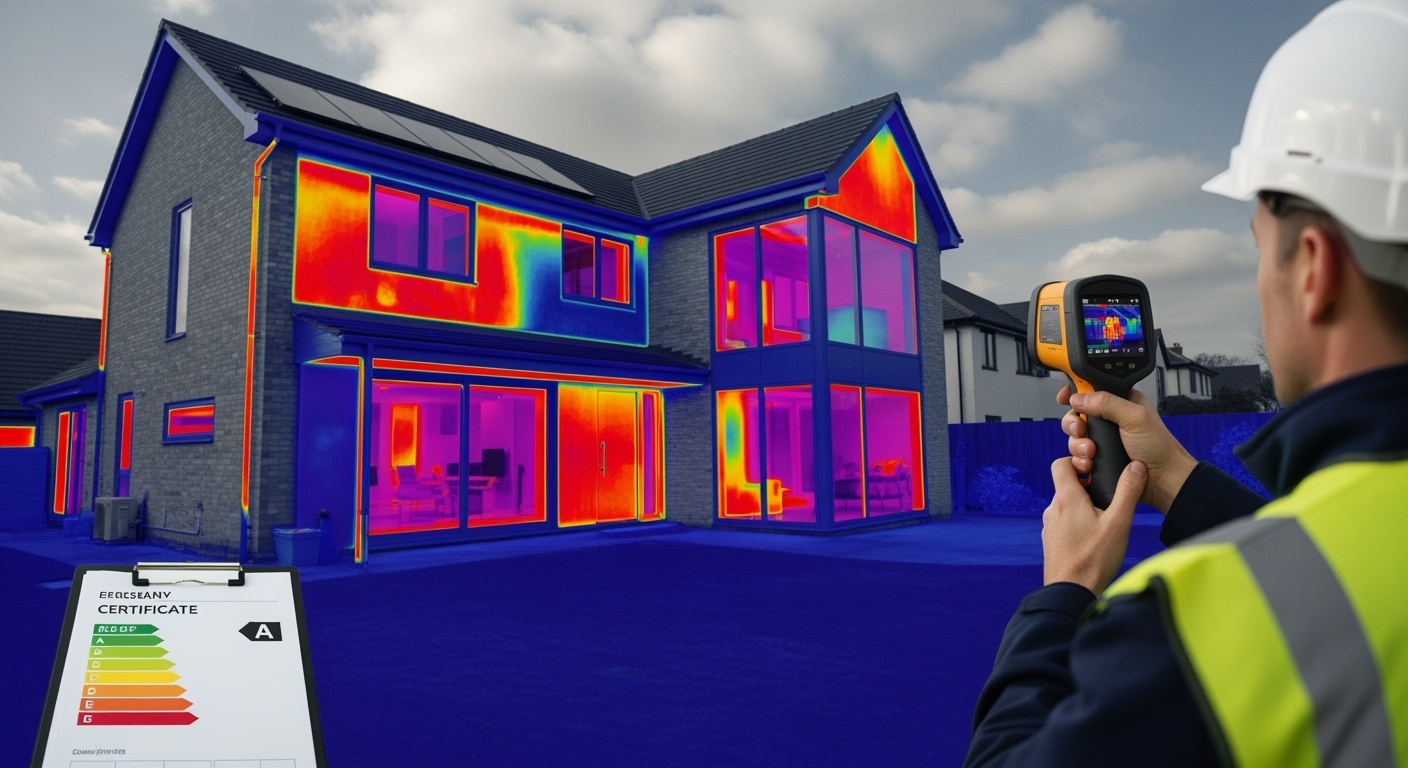
Energy efficiency has become increasingly important in property surveys and valuations across Essex, as homeowners, buyers, and investors recognise the significant impact of sustainability features on both property values and ongoing running costs. Modern property surveys now incorporate comprehensive energy assessments that go far beyond basic EPC ratings.
At Chelmsford Surveyors, we've integrated advanced thermal imaging technology and energy efficiency assessments into our surveying practice, enabling us to provide detailed insights into building performance, insulation effectiveness, and sustainability improvements that can enhance both comfort and property value throughout Essex.
Contents
- Energy Efficiency in Modern Property Surveys
- Thermal Imaging and Insulation Assessments
- EPC Ratings and Beyond
- Sustainable Features and Property Valuation
- Essex Climate and Building Performance
- Retrofit Opportunities and Recommendations
- Future-Proofing Properties
- Government Regulations and Compliance
- Essex Case Studies and Results
Energy Efficiency in Modern Property Surveys
The Evolution of Property Assessment
Traditional property surveys focused primarily on structural integrity and immediate defects. Today's comprehensive assessments must also evaluate energy performance, sustainability features, and long-term environmental impact to provide complete property insights for modern buyers and investors.
Why Energy Efficiency Matters
- Financial Impact: Energy-efficient properties can save £1,000+ annually on utility bills compared to poor-performing homes
- Property Values: High EPC ratings can increase property values by 5-10% in the Essex market
- Market Demand: Buyers increasingly prioritise energy efficiency when making purchase decisions
- Regulatory Compliance: Upcoming legislation will require minimum energy standards for rental properties
Survey Integration Benefits
- Comprehensive Assessment: Identifies both immediate defects and long-term performance issues
- Prioritised Improvements: Ranks energy efficiency upgrades by cost-effectiveness and impact
- Financial Projections: Provides ROI calculations for potential energy efficiency investments
- Future-Proofing: Ensures properties meet evolving environmental standards
Interactive Energy Assessment Guide
Insulation
Windows
Heating
Renewables
Thermal Imaging and Insulation Assessments
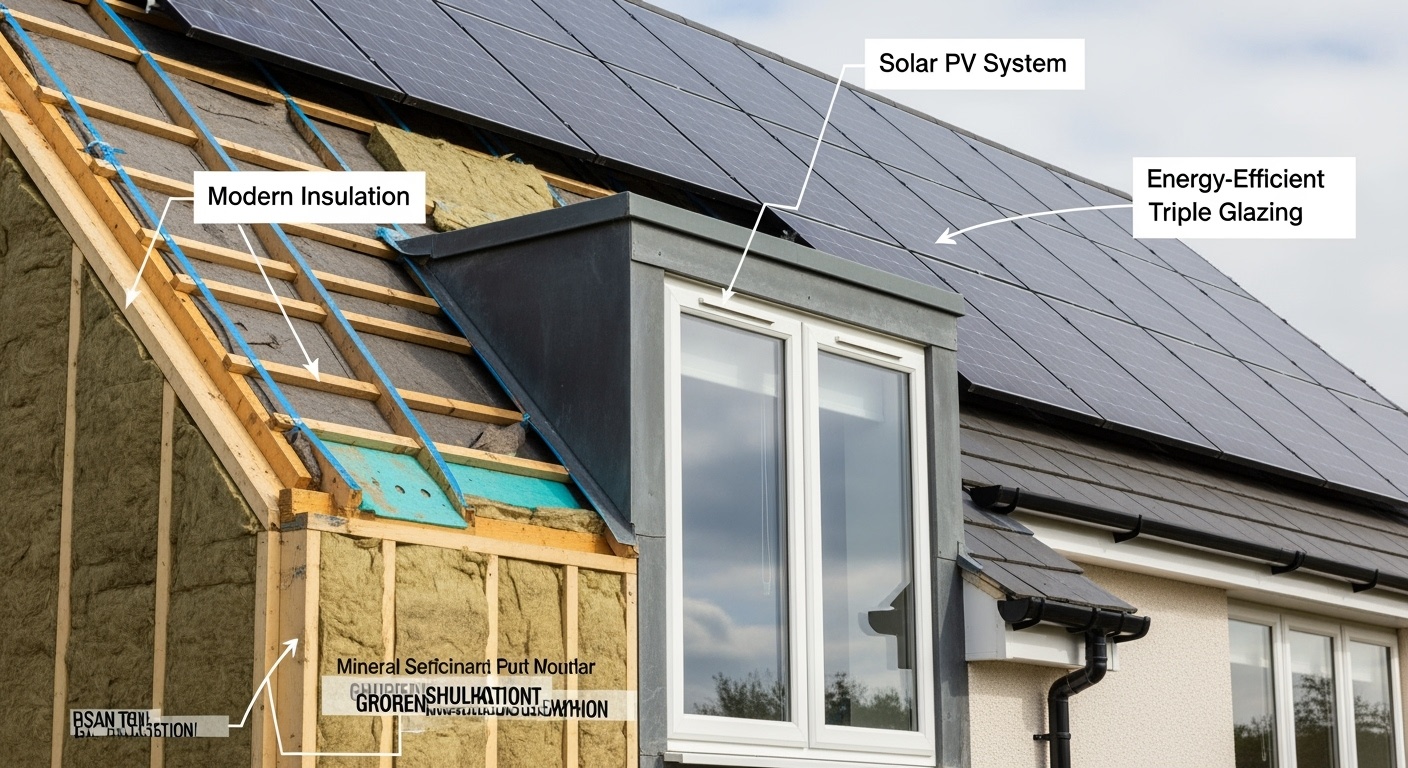
Thermal imaging technology has revolutionised energy efficiency assessments in property surveys, enabling surveyors to visualise heat loss patterns, identify insulation defects, and quantify building performance with unprecedented accuracy. This advanced technology is particularly valuable for Essex properties where weather conditions create significant heating and cooling demands.
Thermal Imaging Capabilities
Detection Capabilities:
- • Heat loss through walls, roofs, and foundations
- • Insulation gaps and thermal bridging
- • Air leakage around windows and doors
- • Underfloor heating performance
- • HVAC system efficiency
Measurement Accuracy:
- • Temperature differences to ±0.1°C
- • Heat flux quantification
- • U-value calculations for building elements
- • Blower door test integration
Assessment Results
Common Findings in Essex:
- • 65% of Victorian properties show significant heat loss
- • Poorly insulated cavity walls in 1970s builds
- • Single glazing responsible for 25% heat loss
- • Loft insulation below recommended levels in 40% of homes
Energy Saving Potential:
- • Wall insulation: 20-35% heating cost reduction
- • Loft insulation: 10-25% savings
- • Double glazing: 10-20% improvement
- • Draught-proofing: 5-15% efficiency gain
Thermal Survey Methodology
Pre-Survey Preparation:
- • Minimum 10°C temperature differential
- • Stable weather conditions for 12+ hours
- • Property heated normally for 24 hours
- • External thermal imaging in early morning
Data Collection:
- • Systematic external and internal imaging
- • Multiple angles and viewpoints
- • Contact temperature verification
- • Environmental condition recording
Analysis and Reporting:
- • Heat loss quantification
- • Priority improvement recommendations
- • Cost-benefit analysis
- • Visual thermal report with explanations
EPC Ratings and Beyond
While Energy Performance Certificates (EPCs) provide a standardised baseline for property energy efficiency, modern property surveys must look beyond these basic ratings to provide comprehensive insights into actual building performance, potential improvements, and long-term sustainability considerations.
Understanding EPC Ratings
Essex Property Distribution
Current EPC Distribution:
- • A-B Rating: 8% of Essex properties
- • C Rating: 22% (target standard)
- • D Rating: 35% (most common)
- • E Rating: 25% (requires improvement)
- • F-G Rating: 10% (poor performance)
Market Trends:
- • Properties rated C+ sell 8% faster
- • F-G properties face marketing challenges
- • Rental minimum standard: E rating
- • Future target: All properties C+ by 2035
Beyond Basic Ratings
Advanced Assessment:
- • Actual vs predicted energy consumption
- • Thermal comfort and overheating risk
- • Indoor air quality factors
- • Renewable energy potential
- • Future regulation compliance
Holistic Considerations:
- • Occupant behaviour impact
- • Maintenance requirements
- • Upgrade cost-effectiveness
- • Technology integration potential
EPC Improvement Cost-Benefit Analysis
Sustainable Features and Property Valuation
Modern property valuations increasingly consider sustainable features and environmental performance as significant value factors. Our comprehensive assessments evaluate both existing green technologies and the potential for future sustainability improvements, providing clients with complete insights into environmental value propositions.
High-Value Sustainable Features
Solar Panel Systems
4kW systems add £3,000-£5,000 to property value while reducing annual energy costs by £600-£900.
Air Source Heat Pumps
Modern heat pump installations can increase property values by £5,000-£8,000 with annual savings of £400-£700.
Triple Glazing
High-performance windows add £2,000-£4,000 value with significant comfort and efficiency improvements.
Smart Home Integration
Intelligent heating, lighting, and energy management systems appeal to modern buyers and improve efficiency.
Valuation Impact Factors
Market Premium Analysis:
- A-rated properties: 5-8% premium over comparable D-rated homes
- Renewable energy systems: Direct ROI typically 60-80% of installation cost
- Green mortgages: Access to preferential interest rates for efficient properties
- Future-proofing: Properties meeting 2030 standards command premium pricing
- Running costs: £1,000 annual saving ≈ £15,000 property value increase
Sustainability Checklist for Essex Properties
Energy Generation:
- ☐ Solar PV panels (south-facing optimal)
- ☐ Solar thermal hot water systems
- ☐ Battery storage integration
- ☐ Ground/air source heat pumps
- ☐ Micro-wind generation potential
Efficiency Measures:
- ☐ Wall insulation (cavity/external)
- ☐ Loft insulation (minimum 270mm)
- ☐ Floor insulation and draught-proofing
- ☐ High-performance windows and doors
- ☐ LED lighting throughout
Smart Technology:
- ☐ Smart thermostats and zoning
- ☐ Energy monitoring systems
- ☐ Electric vehicle charging points
- ☐ Water-saving technologies
- ☐ Home automation integration
Essex Case Studies and Results
Case Study 1: Victorian Terrace Energy Upgrade
Property: 1890s Victorian terrace, Chelmsford • Original EPC: F (32) • Target: C (75)
Thermal Survey Findings:
Extensive heat loss through solid walls, single glazing, and uninsulated loft. Annual heating costs £2,400 with poor comfort levels throughout winter months.
Implemented Improvements:
- • External wall insulation (90mm PIR boards)
- • Triple glazed sash window restoration
- • 300mm loft insulation upgrade
- • Air source heat pump installation
- • Smart heating controls and zoning
Results Achieved:
EPC rating improved to B (82) with 65% reduction in heating costs. Property value increased by £18,000, significantly exceeding investment costs.
Investment vs Return:
- • Total investment: £24,000
- • Annual energy savings: £1,560
- • Property value increase: £18,000
- • Payback period: 4 years (energy savings only)
- • Green mortgage rate reduction: 0.2%
Case Study 2: 1970s Detached House Modernisation
Property: 1970s detached house, Great Baddow • Original EPC: E (48) • Target: B (85)
Energy Assessment:
Cavity wall insulation gaps, inefficient gas boiler, and poor window sealing. High energy consumption with uneven heating and summer overheating issues.
Comprehensive Upgrade:
- • Cavity wall insulation replacement
- • 4kW solar PV system with battery storage
- • High-efficiency condensing boiler
- • Double glazing replacement (A-rated)
- • Mechanical ventilation with heat recovery
Performance Improvements:
EPC rating achieved B (86) with 58% reduction in energy costs. Eliminated overheating issues and achieved consistent comfort levels year-round.
Financial Analysis:
- • Total project cost: £19,500
- • Annual energy savings: £890
- • Solar export income: £240/year
- • Property value uplift: £12,000
- • Overall payback: 6.5 years
Expert Energy Assessment Recommendations
Professional Energy Survey Benefits
"Energy efficiency assessment requires both technical expertise and practical experience to provide meaningful recommendations. Our thermal imaging surveys and comprehensive energy evaluations help clients make informed decisions about improvement investments, prioritise upgrades for maximum impact, and future-proof their properties against evolving environmental standards."
Thermal Assessment
- ✓ Professional thermal imaging equipment
- ✓ Qualified thermography Level 2 certification
- ✓ Blower door testing integration
- ✓ U-value calculations and heat loss quantification
- ✓ Detailed improvement recommendations
- ✓ Cost-benefit analysis for upgrades
EPC Enhancement
- ✓ Detailed EPC improvement pathways
- ✓ SAP calculation expertise
- ✓ Renewable energy system assessments
- ✓ Government grant and funding advice
- ✓ Compliance with future regulations
- ✓ Green mortgage qualification support
Value Enhancement
- ✓ Property value impact assessments
- ✓ Market positioning advice
- ✓ ROI calculations for improvements
- ✓ Future-proofing strategies
- ✓ Sustainable feature valuations
- ✓ Marketing advantage identification
Why Choose Chelmsford Surveyors for Energy Efficiency Assessment?
Advanced Technology Integration
- • Professional FLIR thermal imaging cameras
- • Blower door testing for air tightness
- • Moisture meters and environmental monitoring
- • SAP software for accurate EPC predictions
Sustainability Expertise
- • 15+ years experience in energy efficiency
- • Certified Passivhaus and BREEAM knowledge
- • Renewable energy system assessment
- • Government funding and grant guidance
Conclusion: Energy Efficiency as a Value Driver
Energy efficiency has evolved from a nice-to-have feature to a critical factor in property valuation, marketability, and long-term investment performance. Modern property surveys must incorporate comprehensive energy assessments to provide complete insights into building performance and improvement potential.
Advanced thermal imaging technology, combined with expert knowledge of Essex building types and climate conditions, enables surveyors to identify improvement opportunities that deliver both immediate comfort benefits and long-term financial returns. Properties with superior energy performance increasingly command premium prices and faster sales.
As environmental regulations strengthen and buyer expectations evolve, energy efficiency will become even more critical to property values. Investing in comprehensive energy assessments and targeted improvements today positions properties for success in tomorrow's increasingly sustainability-focused market.